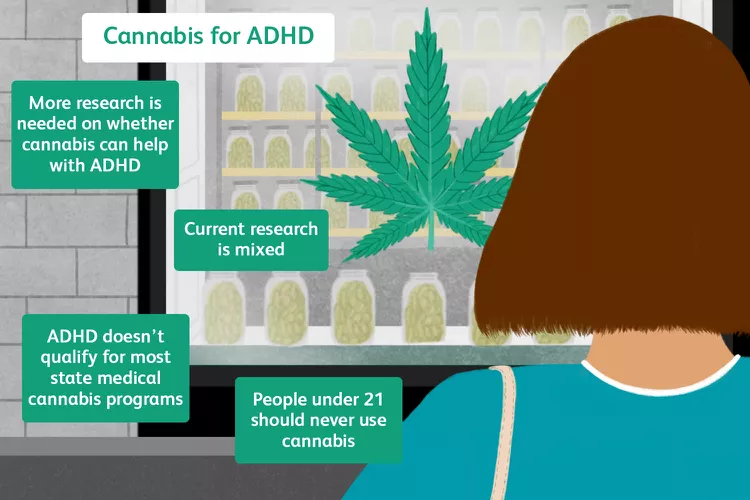
The research on cannabis for ADHD symptom relief is inconclusive and mixed. Some studies suggest potential benefits for focusing and calming, but long-term effects and risks, such as substance use disorder, must be considered
Can Cannabis Ease ADHD Symptoms?
Understanding the two components of cannabis is crucial to understanding how marijuana can alleviate ADHD symptoms.
- The "high" associated with cannabis is caused by the psychoactive component, Tetrahydrocannabinol (THC). The brain areas responsible for focus, coordination, and reaction time are affected by it.
- Cannabidiol (CBD): CBD is a nonpsychoactive component in cannabis and hemp (a type of cannabis plant that contains 0.3% or less THC). It has an effect on various brain regions and can counteract the effects of THC. CBD has been proven to aid in regulating brain activity.
When you smoke or consume cannabis, you take in both THC and CBD.
Cannabis for ADHD. What Research Says
Due to its Schedule 1 status, research on using weed for ADHD is limited, as it is not currently accepted for medical use and has the potential for abuse. There are conflicting reports from available studies regarding the effectiveness of cannabis in treating ADHD.
- A study conducted in 2020 that involved 112 adult patients with ADHD who used medical marijuana found that those using higher doses of compounds such as CBD used fewer other medications for ADHD.
- In a 2023 review of studies, it was noted that those with ADHD who had cannabis use had structural brain differences compared to those who didn't. The review concluded that the evidence supporting the benefits of cannabis in individuals with ADHD is inconclusive
- In a study conducted in 2022, it was found that people with ADHD who used cannabis reported self-reported benefits like symptom improvement and reduction in medication side effects. It's important to note that self-reported data is not always a reliable indicator of effectiveness because it can be biased.
More research is needed to determine if weed can have benefits for adults with ADHD. However, at this time, most states with medical cannabis programs do not include ADHD as a qualifying condition for getting a license.
Is Microdosing Cannabis an Option for ADHD Relief?
There’s not enough research to conclude whether cannabis helps people with ADHD. This includes microdosing, or taking ultra-low doses of cannabis to help manage symptoms without a high. If you're considering microdosing to manage ADHD, discuss it with your healthcare provider.
Marijuana and Kids
Despite the fact that ADHD is commonly diagnosed in children, cannabis should not be smoked by most young people. Studies have revealed that marijuana use in adolescents can alter brain structure and function, leading to long-term behavioral and psychological problems.
Even states with recreational cannabis laws don’t allow people under 21 years old to purchase or consume weed. The number of medical marijuana programs for children is extremely limited, and ADHD is not a qualifying condition.
How Does Cannabis Interact With ADHD Medications?
Limited research exists on how cannabis interacts with ADHD medications like Adderall (dextroamphetamine-amphetamine) and Ritalin (methylphenidate). A small 2015 study of adults without ADHD found that combining Ritalin with THC caused a significant increase in heart rate compared to Ritalin alone.
If you take ADHD medications, it's crucial to openly discuss your marijuana use with your healthcare provider.
Weed use is becoming mainstream and is legal in some places. Where it is legal, it is better regulated and safer to use. Buying marijuana products from a cannabis dispensary or other regulated source means you will know what is in the products and how much is safe to use, unlike purchasing from an unregulated cannabis dealer. We also urge your to check the local cannabis laws.
Your healthcare provider can help you understand the benefits and risks of using cannabis with ADHD medications
Marijuana Effects by Strain Type
Different strains of marijuana are believed by some people to have different effects. The cannabis plant comes in various varieties known as strains. Marketing commonly distinguishes between these two strains:
- Sativa strains are believed to energize.
- Indica strains are believed to have calming and pain-reducing effects.
The effects of cannabis are dictated by its levels of THC and CBD, with each having different effects on the brain and body. Pure Indica strains are thought to have a higher proportion of CBD, which should increase their calming effects. However, research shows the differences between strains are not necessarily accurate, primarily because of crossbreeding.
CBD oil and CBD products are advertised as providing the benefits of cannabis without the "high." However, limited research has found inconsistent evidence for the benefits of CBD products. One review of studies concluded that CBD products could have short-term benefits for people with ADHD, but that long-term use was associated with ongoing problems in cognitive performance and impacts on success in school or at work.
If you're considering cannabis for your ADHD, talk to your healthcare provider about trying CBD.
When Does Weed Use Become a Substance Use Disorder?
A substance use disorder is likely to develop in approximately 30% of cannabis users. A substance use disorder occurs when substance use begins to interfere with a person’s day-to-day functioning.
It has been proven by research that CBD alone, without THC, is not addictive. If you are worried about developing a substance use disorder, it's best to select a product that only contains CBD instead of both CBD and THC.
Risks of Using Marijuana
Marijuana use comes with other long- and short-term risks, such as:
- Breathing problems (from marijuana smoke)
- Temporary mental effects like paranoia and hallucinations
- Impacts on career and academic success
- Poor cognitive performance and executive function
If buying from an unregulated dealer, the product may have other substances added, some of which have their own health risks.
How Much Cannabis Is Too Much?
If your cannabis use is interfering with your day-to-day functioning, it’s time to seek help. Keep in mind that cannabis is illegal.